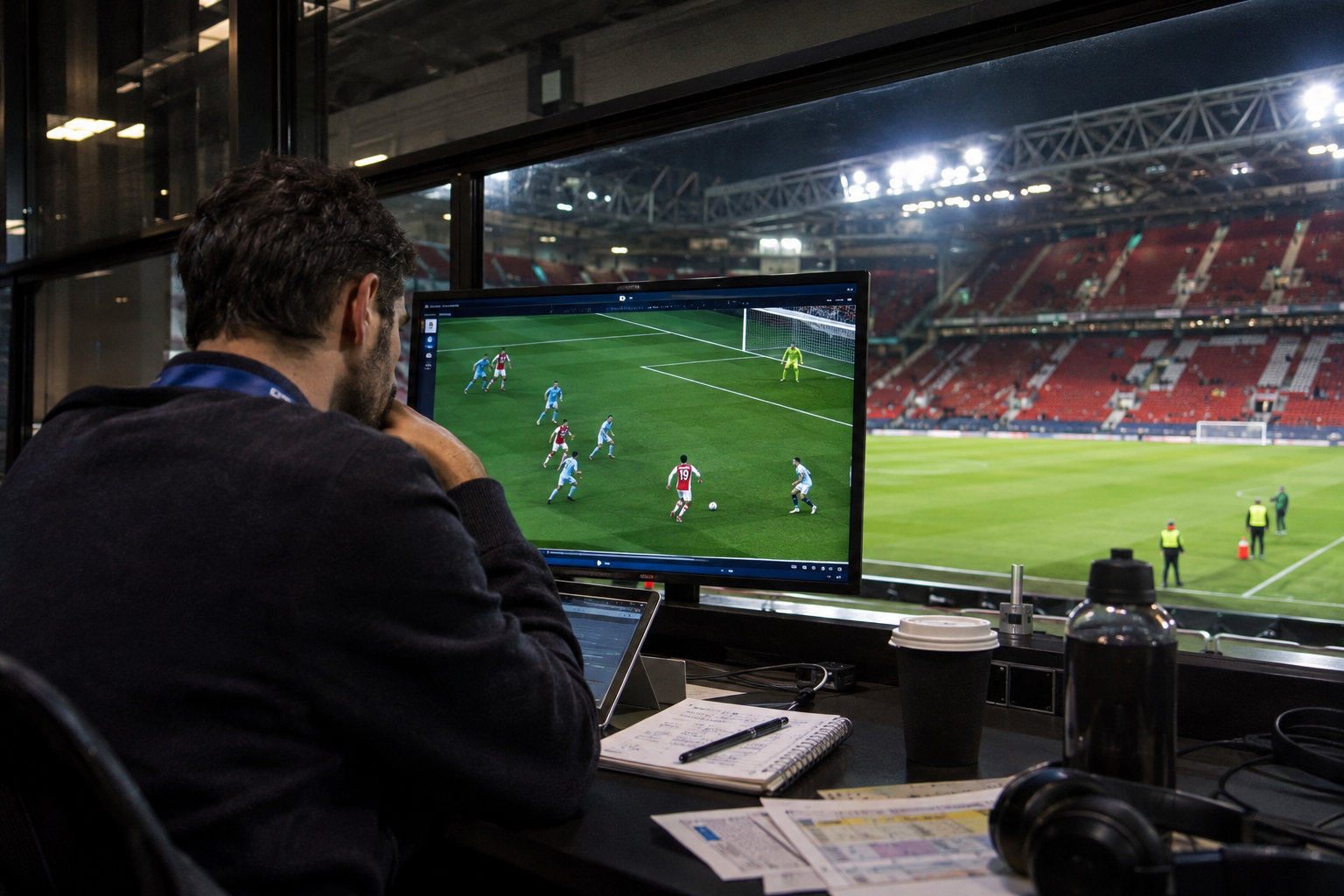
A football match rarely reveals its entire story during the first viewing. The excitement of a goal, the tension of a penalty decision or the reaction to a late substitution can dominate attention, leaving important details unnoticed. In a competition as demanding and unpredictable as the English Premier League, these smaller moments often explain why a game developed in a particular direction. Exploring Premier League match replays gives supporters an opportunity to return to those encounters, examine the action more carefully and discover aspects of the performance that may have escaped them on matchday.
The value of watching a game again goes beyond nostalgia. A replay can reveal how a team adjusted its formation, why a promising attack failed or how one decision changed the balance between two opponents. For supporters who enjoy understanding football as much as experiencing its excitement, the second viewing can be just as rewarding as the original broadcast.
The Premier League Is a Competition of Constant Adjustments
The English top flight is known for its demanding schedule, varied playing styles and intense competition between clubs. Teams must regularly face opponents with different strengths, from sides that dominate possession to those that prefer direct attacking transitions. This variety makes preparation especially important.
A manager might begin a match with a high defensive line, expecting to pressure the opposition in its own half. If the opponent repeatedly finds space behind the defenders, the original plan may become too risky. The coaching staff can respond by moving the defensive line deeper, changing the pressing triggers or introducing a midfielder who offers greater protection.
These adjustments are not always immediately obvious. During a live match, supporters naturally follow the ball and react to the most visible incidents. A replay allows them to observe the team’s shape away from the immediate action. It becomes easier to recognise how players move when possession changes, how defensive lines maintain their distances and which areas an opponent is attempting to exploit.
The Premier League’s tactical variety makes this especially interesting. Two clubs can approach the same fixture with completely different priorities, and their ability to adapt during the game can become decisive.
What Happens Before the Camera Finds the Ball
One of the most useful reasons to revisit a match is the opportunity to study movement away from possession. Football is often described through passes, shots and tackles, but much of the work that creates these actions takes place before the ball reaches its destination.
An attacking midfielder may move towards a defender to create space for a teammate. A winger can remain wide to stretch the opposition’s defensive line, while a full-back moves into a central position to provide another passing option. These movements can make a team difficult to defend against even when the player involved never touches the ball.
The same principle applies to defensive organisation. A centre-back may step forward to intercept a pass because a midfielder has already covered the space behind him. A winger may track an opposing full-back to prevent an overload on the flank. These coordinated actions are easy to overlook when attention remains fixed on the player in possession.
Watching a match again gives supporters more time to recognise these relationships. Instead of following only the final action, they can examine how an attack was constructed and how the opposition attempted to prevent it.
Goals Tell Different Stories When Viewed in Context
A spectacular finish is often the most memorable part of a match, but its significance becomes clearer when the entire sequence is considered. The player who scores receives the attention, yet the opportunity may have been created by several earlier decisions.
A goal following a quick counterattack might reveal how effectively a team recovers possession and moves forward before the opponent can reorganise. A strike after a long period of pressure may demonstrate the value of patience, accurate passing and intelligent movement around the penalty area.
Replays can also show how defensive mistakes contribute to scoring opportunities. A defender might lose track of an advancing opponent, a midfielder may fail to close a passing lane, or a goalkeeper could be left exposed because the defensive line has become disorganised.
These details do not reduce the importance of individual skill. On the contrary, they help explain why a particular finish was possible. A forward’s composure becomes even more impressive when viewers understand the pressure surrounding the attempt and the limited time available to make a decision.
The wider context also matters when assessing the consequences of a goal. An early strike can change the tactical balance of a contest, while a late equaliser may force both teams to reconsider their priorities during the closing minutes.
The Importance of Substitutions and Changing Momentum
Substitutions are among the most interesting elements to examine during a second viewing. Their influence is not always measured by goals or assists. Sometimes a substitute changes the rhythm of a match simply by occupying a different position or offering the team a new way to progress the ball.
A manager may introduce a faster forward to challenge tired defenders, bring on an additional midfielder to improve control or replace a wide player whose defensive responsibilities have become difficult to maintain. The immediate effect may appear modest, but the change can gradually influence where the game is played.
A replay makes it easier to compare the team’s behaviour before and after the substitution. Supporters can observe whether the attacking structure changes, whether possession becomes more secure and whether the opposition is forced to defend differently.
Timing is another important factor. An early substitution may indicate that the original tactical plan is not working as intended. A change shortly after an opponent scores could be an attempt to restore balance, while a late introduction may be designed to protect a result or create one final attacking opportunity.
Understanding these decisions provides a more complete picture of a manager’s influence. Coaching is not limited to the starting formation; it continues throughout the match as new problems emerge.
Rivalries Become More Interesting Through Repeated Viewing
The Premier League’s biggest rivalries carry emotional significance that extends beyond the league table. Meetings between historic opponents often involve intense individual battles, contrasting football identities and expectations built over many seasons.
During the original broadcast, supporters may concentrate on the score and the most dramatic incidents. Watching again can reveal the tactical details behind the rivalry. One team may deliberately target an opponent’s weaker flank, while the other attempts to control the central areas and limit dangerous transitions.
Individual matchups can be particularly revealing. A winger repeatedly challenging the same full-back may force the opposition to provide additional defensive support. A striker’s movement can disrupt a centre-back partnership, creating space for attacking midfielders to advance.
The emotional atmosphere also influences the way teams perform. Players may take greater risks, supporters can intensify pressure and refereeing decisions may become subjects of prolonged discussion. A replay allows viewers to separate the sequence of events from the immediate emotional reaction and consider how each incident affected the contest.
This makes repeated viewing valuable not only for understanding tactics but also for appreciating the history and personality of English football rivalries.
Learning From Defensive Performances
Attacking moments tend to attract the most attention, yet defensive performances often determine whether a team can maintain its position in a competitive league. A clean sheet may appear straightforward in the final statistics, but it can be the result of several coordinated efforts.
Defending begins before an opponent reaches the penalty area. Midfielders must close passing lanes, forwards may be required to initiate pressure and defenders need to maintain distances that prevent attackers from finding space between the lines.
A replay can show how a team protects its most vulnerable areas. It may reveal a deliberate decision to allow harmless passes in wide positions while defending the central channels more aggressively. Alternatively, a side might press high to prevent the opposition from building attacks comfortably.
Individual defensive contributions also become easier to appreciate. A well-timed interception can prevent a dangerous attack from developing, while a defender’s positioning may force an opponent into a less favourable shooting angle. These actions rarely receive the same attention as a spectacular save, but they can be equally important.
A Different Way to Follow the Season
The Premier League calendar is full of competing storylines. Clubs manage domestic fixtures, cup commitments, injuries and changes in form while attempting to remain consistent across a long campaign. A single match can provide clues about a team’s direction, but those clues become more meaningful when viewed alongside its previous performances.
Rewatching selected games can help supporters recognise patterns. A team that repeatedly concedes chances from crosses may have a structural weakness that opponents will continue to target. Another club might demonstrate improving coordination between its midfield and attack, suggesting that a tactical change is beginning to work.
This approach also encourages a more balanced assessment of individual players. A forward who does not score may still contribute through pressing and intelligent movement. A midfielder who completes many passes may be playing too cautiously to influence the attacking phase. The full match provides a broader basis for evaluating performance than a short collection of highlights.
For supporters who cannot watch every fixture live, replays offer another way to stay connected with the competition. They can return to an important game when time allows, follow the development of a particular team and examine the moments that shaped a result.
The Match Does Not End With the Final Whistle
The final score provides a clear conclusion to a fixture, but the football story often continues through discussion, analysis and reflection. Coaches review performances, players consider their decisions and supporters debate the incidents that influenced the outcome.
A second viewing adds another layer to that process. It allows the excitement of the original broadcast to settle, making room for a closer examination of the decisions and movements that shaped the game. A missed opportunity may look different when the full attacking sequence is visible, while a defensive intervention can become more impressive once its importance is understood.
The Premier League is compelling because its matches combine technical ability, tactical conflict and unpredictable human drama. Returning to a game makes it possible to appreciate all three dimensions. Every replay offers another opportunity to notice something new, whether it is a subtle positional adjustment, a decisive substitution or a moment of individual intelligence.
For supporters who want more than a quick reminder of the result, the second look can reveal why a match mattered and how its defining moments came together. The final whistle may close the contest, but it does not have to end the discovery.